2006-11-10

Guy Fawkes Night


England moves by train, they are cheap and efficient. In fact it is cheaper for me to take the train to the university every day than the bus: a roundtrip train fare is £2.50 or about $5.20. England was built on rails and they went to great lengths to ensure that they were not disruptive. This is a viaduct that traverses a part of downtown Brighton; it is over 100 years old and is quite a feat of engineering, especially when you consider it is made of bricks.


As I mentioned earlier there are now two of us in the MSc Plant Conservation course. Bakary Seenah joined me mid-October. He is from The Gambia where he is in charge of the seed collection unit for that country. It is quite interesting talking to him; we take so much for granted. There are five people in our lab, they are all coming over for dinner tonight so I hope to post a group shot, we have a Canadian (me) a Gambian, two Ghanese and a Indian.


The weather has been incredible of late and I spent Thursday afternoon on the beach, people were actually swimming. On Saturday I took off with Geoff, the musician who lives in the flat above me for Lewes for Guy Fawkes Night.


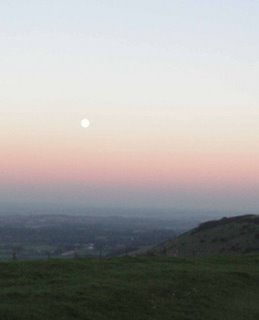
To get to Lewes, we biked up to Ditchling Beacon and across the ridge of the South Downs, this is the highest point of land around and in the distance you can see the North Downs which I am told are not as spectacular. The large complex is Plymton Agricultural College.


The town of Lewes has a 400 year tradition of bonfires and parades; the town of 12,000 people is inundated on November 5 by 50,000 visitors. We went by bike since it was an hour wait to get back out by train. The pictures do not do it justice; it was absolutely incredible with each of the societies trying to out do each other. Every November 5 people burn an effigy of Guy Fawkes who tried to blow up the houses of parliament. It is celebrated in Lewes since, on the edge of town a battle was fought that eventually lead to the formation of parliament.


Guy Fawkes , 1606, also known as Guido Fawkes, born in York, was an English Soldier and member of a group of Roman Catholics who attempted to carry out the Gunpowder Plot on 5 November 1605. The plot was an attempt to assinate the Protestant King James I (James VI of Scotland) and the members of both houses of the Parliment of England. He tried to achieve this by blowing up Westminster Palace during the formal opening session of the 1605 Parliament, in which the king would address a joint assembly of both the House of Lords and the House of Commons. Guy Fawkes was in large part responsible for the later stages of the plan's execution. His activities were detected, however, before the plan's completion. Following a severe interrogation involving the use of torture and a trial at Westminster Hall , Fawkes and his conspirators were executed for treason and attempted murder.


Of course all that cycling is thirsty work; we came back via the local pub in Falmer Village at the university. I am a local here now and know the owner and his wife quite well as we closed the pub on Saturday night. John, the landlord is an avid model train enthusiast and has one running around the top of the bar.


2006-10-26


On the Beach


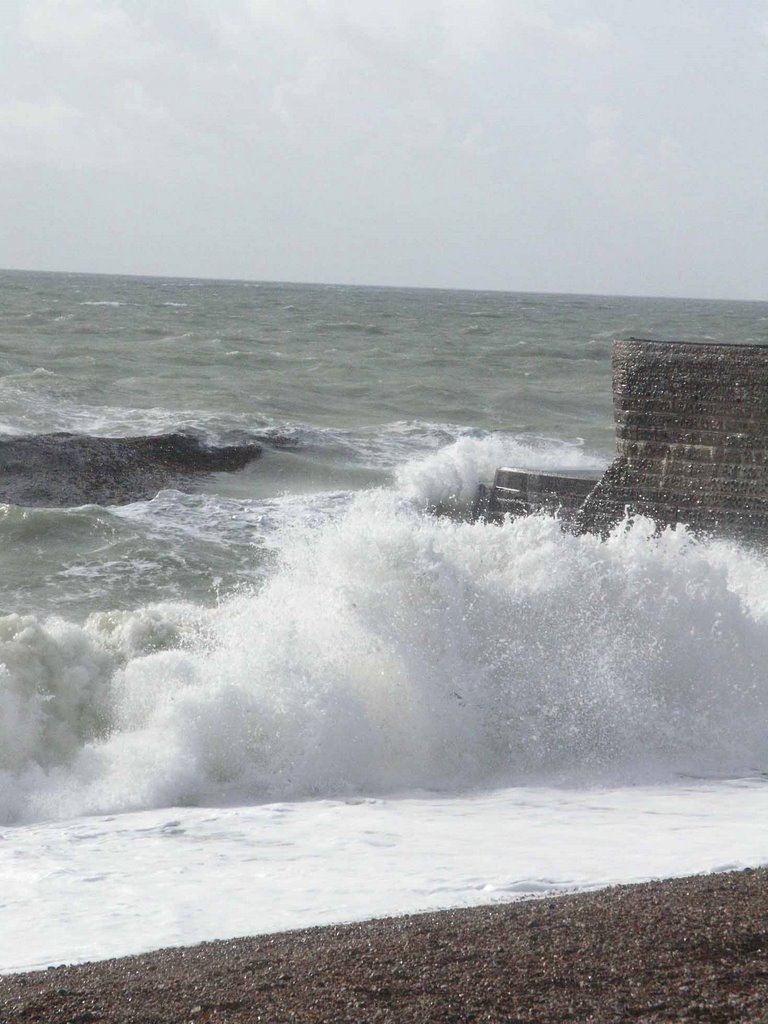
On the beach is a title from one of my favourite albums by Chris Rea. This was where most of Saturday was spent, it was warm and sunny, however the planned bicycle trip over the East Downs on Sunday was postponed because of the torrential downpours. I was joined by Bakery in the MSc course this week; he arrived late and is from the Gambia where he is in charge of the countries first seed bank, hence I can see a trip to the Gambia one summer. He had not been into town; he stays at the university, so this was my chance to act as tour guide.


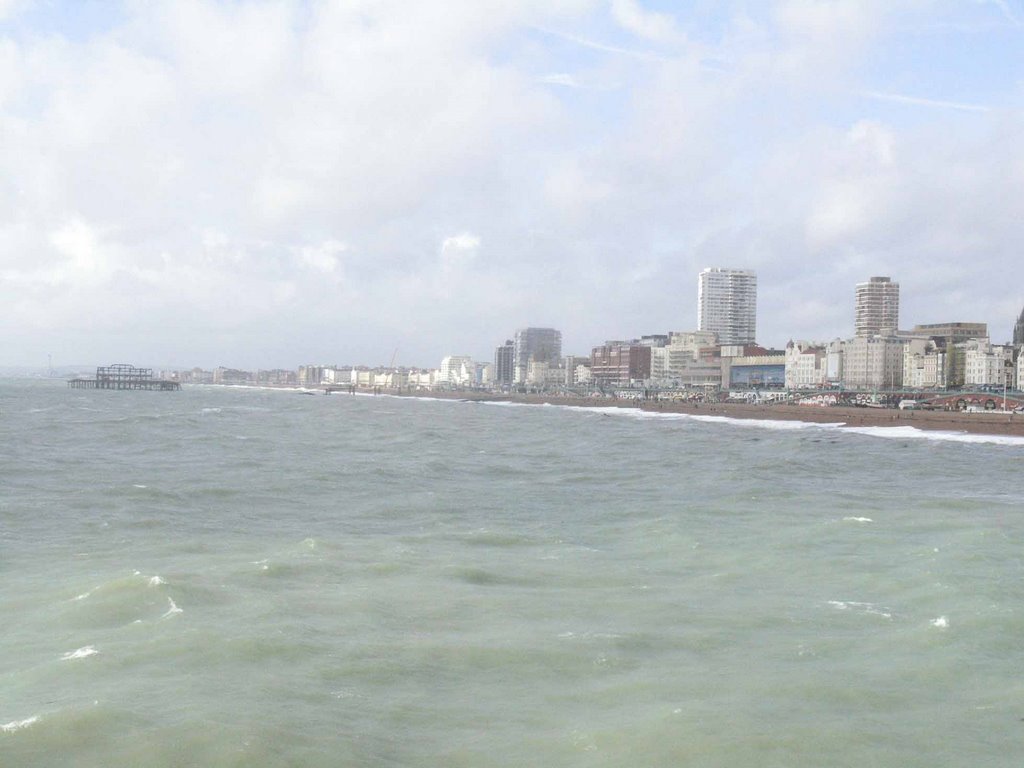
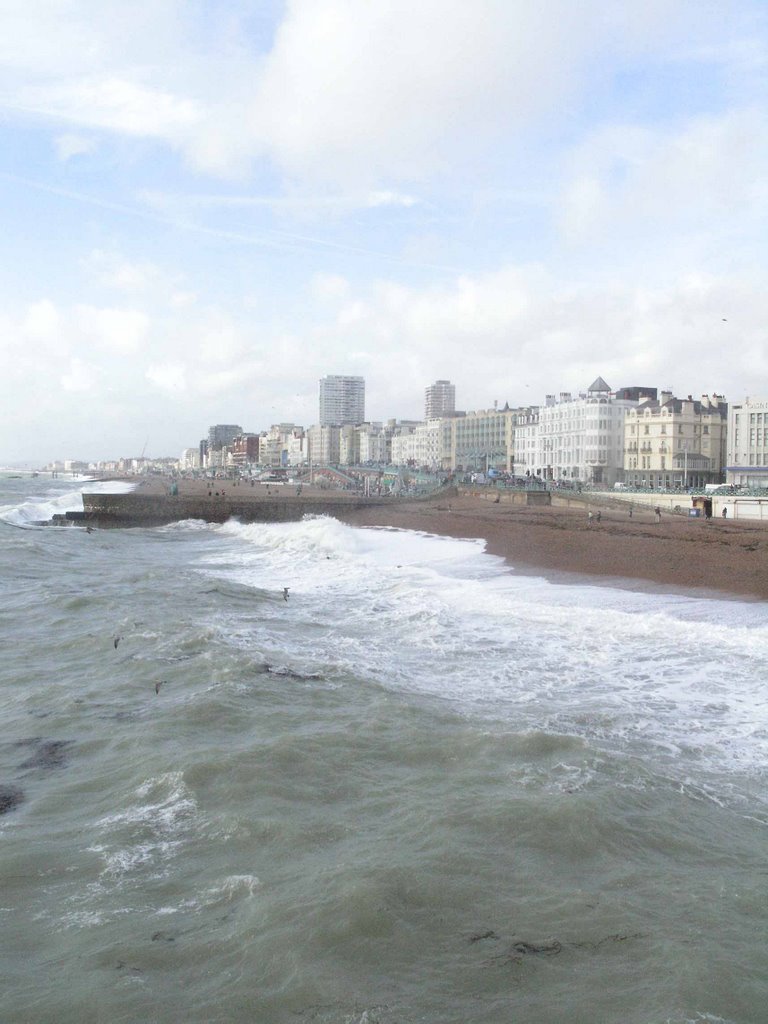
Brighton has one main pier nowadays and that’s where most of the photographs were taken from, as you can see it is quite a distance out and reminds me of Coney Island since it is all cheap food and cheap amusements.


From the current pier you can see the remnants of the old pier that was abandoned and then recently caught fire. They plan on building a tall viewing ‘Thing’ on this site and it is quite controversial since it will clash with the regency architecture that fronts that part of the beach. Frank Gehry has a project planned for the ocean front as well; it looks like a building undergoing convulsions, typical Gehry style. I will try to get an image to share with you at some point.


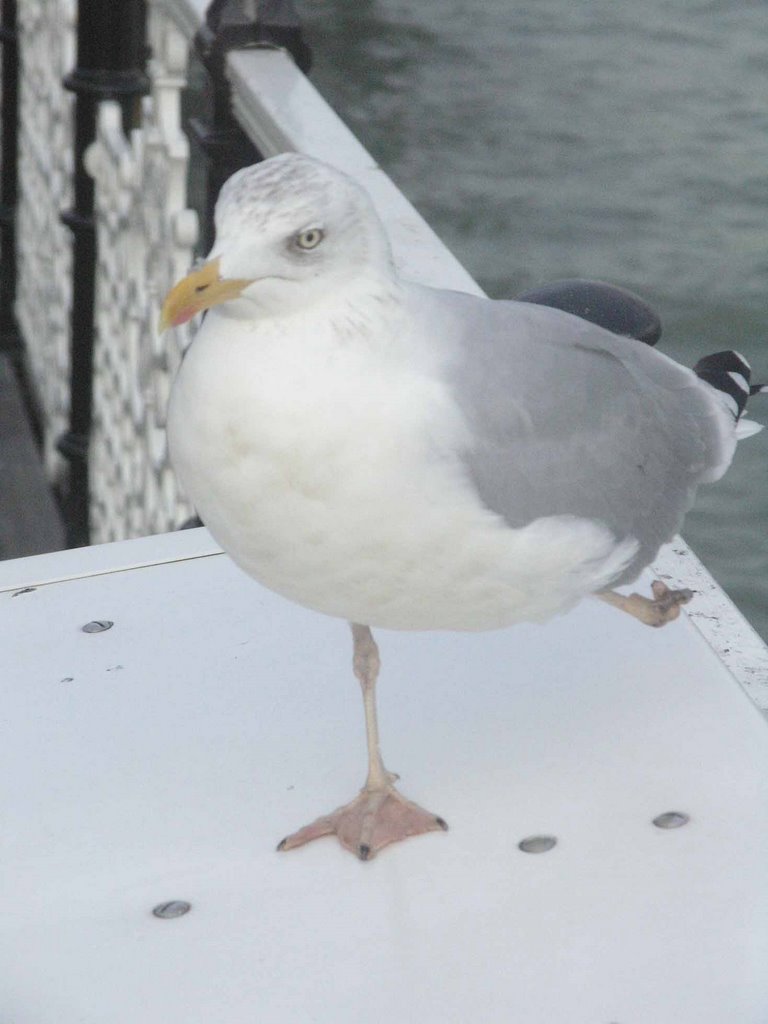
On Brighton pier of course is where the crippled Jonathan Livingston Seagull hangs out after failing at his high flying acrobatics. It is amazing how smart he is ( how do you determine the sex of a seagull?), there he stands on one leg at feeding height in the midst of all, looking for handouts, all he needed was a cup and sign.


On the way back from the pier we passed the Quaker Meeting House, actually we went in since they were having a sale of local produce. I put this in for my friend Tina who is a Quaker and once took me to the Quaker meeting house in Coldstream. Tina, they all have the same feeling, this one however sits on prime real estate close to the ocean in the old part of town.


The final shot is the last hill I go down everyday that I ride the bike to the university, and of course it is one of the first four I must go up on my return journey home. This was taken half way before I entered Stamnar Woods for the rest of the climb.

2006-10-17

The Week That Was


At the top of the hill about five minutes walk from the house is an ancient Roman fort. It is the highest point of land for miles around with views to the ocean and the Sussex Downs. On a clear day you can see both the city of Brighton and Hove and the village of Falmer and the University of Sussex as seen in this photo.


In the city of Brighton is the Royal Pavilion. The pavilion was built in 1802 by the then George, Prince of Wales later to become king George IV. The gardens around the pavilion were designed by John Nash and laid out in the regency style. This style of gardening and plant display is somewhat eclectic in nature with large informal beds of mixed trees, shrubs, perennials, bulbs and annual plantings. The gardens look unkempt since the mown grass is 'loosely mown' emulating how it would have been scythed in the 1800's. In my opinion, after viewing many gardens of an earlier or similar period where they are mown it is just an excuse to save money and time. Nonetheless it is an interesting landscape with uninteresting plants. The graduation ceremony for the postgraduates is held here in January.


http://www.royalpavilion.org.uk/


On Sunday it was once again a tour around the countryside, this time over a portion of the downs. The Sussex Downs is an area of open grassland and low deep valleys which are usually treed. Once in the open on the downs it is very windy, hence the lack of trees. If you look at the first image and imagine you were in that image inthe top right hand corner looking back you could be standing at this gate at the edge of the woods. This was the most spectacular trip so far, 6 hours of ever changing but dramatic scenery. There are few hills now that will stop me since some of them are several miles in length I am getting a tremendous workout since we figured it was over thirty miles of fairly technical terrain. We finished our trip some six hours later back at the house, however not before stopping at the little cafe on the beach for a cup of tea.


http://www.vic.org.uk/


The beach in Brighton stretches for miles and is mainly pebbles, however along the entire stretch is the promenade where you can walk or cycle. This is in front of the cafe where we stopped for tea at about 6:30pm on Sunday.


Of course I have to put some serious stuff in as well. To prove to my students that school is not all fun and play. Here I am working in the lab (plant stress unit) performing micropropagation (tissue cultures) of a rare endangered British orchid called Dactylorhiza and cultures of a carnivorous plant called Drosera carpensis as well as a few common plants to test for seed coat cleanliness. Over the next few weeks we should see if I was successful with the cultures. This is the only place in the the world where Dactylorhiza is propagated via tissue culture.

It is called the plant stress unit since we cut up plants and do all sorts of nasty things to them inflicting stress. Tomorrow, Wednesday, I will intentionally infect the resurrection plant (Craterostigma plantagineum) with cultures of Agrobacterium and study the response. More plant stress, stay tuned!

http://www.biols.susx.ac.uk/resgroups/biology/psu/1_introduction.htm

2006-10-07

The First Week

The first week at the University of Sussex has been filled with the back to school culture that one quickly forgets as a teacher. Moving into new digs, getting a phone, and in this case for me a bike, finding the local shops and pubs and then going through the process of registration have all taken on a new vision as a student. I have to say however that the whole process went quite well, there was lot of advance work done by both myself and the university reducing the aggravation substantially.

The scenery in this part of England is spectacular, on my way to the University I cycle through Stamnar Woods and out into Stamnar Village, in a few moments one is out of the city into the country, unfortunately Stamnar Village does not have a pub.


Then there is the age thing, you seem very conscious of the fact that most of the students on campus could be your children, however they seem not to notice you or has happened several times mistook me for a teacher and requested guidance. One fellow even stopped me this week and asked if knew where the barber was on campus; as if I would have a need for such.

I have seen an amazing amount of the countryside in a very short time mainly due to Geoffrey, a musician who lives in the flat above. He is an avid cyclist and a great local resource and has spent quite a bit of time showing me around. I have purchased a new mountain bike (should have brought mine with me from Canada) and last Sunday did close to thirty miles through the villages of Stanmner, Lewes, Newhaven and back under the white cliffs to Brighton. It was an exhausting experience especially with headwinds and torrential downpours and there was grave doubt whether I would be able to walk in the morning; I did, but took the train to the University instead.

Postgrad students are really treated quite differently by the staff here at Sussex than undegraduates, since I am the only one in the MSc (Plant Conservation-Seed Banking) I have one on one lectures or discussions in the professor’s office and work alongside him in lab. This has allowed me to structure the program to my own interests which is quite exciting. I have contact with a few students from last year who are now doing there PhD in some aspect of plant science and this has been extremely beneficial.

The topics are going to be very challenging, next week it is tissue culture, followed by poikilohydry in plants and then onwards covering Ethnobotany, CITES and such. My lab work is quite complicated and essentially we are isolating the DNA of plants so that we can compare and contrast the different populations. I have also been invited to attend other lectures as they run and am in the middle of a series on carnivorous plants; fascinating.

2006-09-25

A Year at Kew: The Garden Guru in Horticultural Paradise.

I’m leaving, in fact by the time this goes to print I will be settled in to my new digs or as the British say ‘flat’ in Brighton, England. No I have not escaped Canada completely, only for a year. This I consider to be my mid-life crisis and not being able to afford a sports car I am off doing what all middle aged college faculty do; I am on sabbatical.

The very word sabbatical is interesting and not being sure what it meant I turned to Mister Oxford (being British I have to use Oxford as opposed to Webster) for an explanation. Realizing that my edition of Oxford is a little out of date (1934) it tells me that a sabbatical is “the seventh year in which Israelites were to cease tilling and release debtors and Israelite slaves”. Since I am not an Israelite and slavery was abolished many years ago there are only two options left to me. However I did offer my dog his freedom. He preferred going to the resort however where he has two home cooked meals a warm bed and rides in the golf cart. Thus the two remaining items according to Oxfords definition of a sabbatical are the debts and rest. Since I owe money I now ask my creditors for forgiveness, I wonder if the bank will pay the mortgage in my absence; I doubt the bank is as understanding as the Israelites.

The only option left open to me then is a rest (the cease tilling part which is quite appropriate for a horticulturist), remember the word rest. Fanshawe College allows a select number of faculty after a tenure of nine years to take a professional leave at partial salary; hence the term sabbatical. Who changed the week into nine days I don’t know but alas that is how modern society works.

My year of ‘rest’ will see me on the other side of the blackboard so to speak as I return to the classroom as a student. It is a little known fact that the worst students are teachers, we quiver at the thought of tests and assignments, term papers and exams cause anxiety attacks and we rebel at that 8:00 am lecture especially when we feel we can do a much better job.

That said I will spend the year completing an MSc in Plant Conservation (seed banking) hence the term sabbatical and rest again.

However, there is that old cliché ‘a change is as good as a rest’ and my change will be quite dramatic. Going from teacher to student will present a huge challenge. I have new admiration and respect for those ‘mature students’ in my own classroom who return to college with such enthusiasm and dedication.

The big change will be however where I am resting, not England specifically since I was born and raised there but the Royal Botanic Gardens, Kew and Wakehurst. If you’re a horticulturist worth your salt you know about Kew and if your the passionate dedicated plant nut you’ve like me put a proviso in your will that your ashes will be scattered in the Rhododendron plantings (quite illegal I’m sure so it must be done covertly) at Kew. Kew is the centre of the universe for plants and plants people, it is for a horticulturist what a trip to the moon is for an astronaut. Thus even though I will be back at school working hard I will in fact be resting.

I promised my editor Jill Worthington (London Free Press) whom I call the comma remover ( she is trying to break my of my bad habit of using too many commas) that I would give periodic updates of the English gardening scene and the trials and tribulations of “ being on the other side of the blackboard”. So, look forward to more drivel from the Garden Guru on the other side of the pond.

You can visit the course website: http://www.lifesci.sussex.ac.uk/gradstudies/pc/ which has links to Kew and the millennium seedbank.

2006-09-06


Before I Go


As I get ready to leave Canada and Fanshawe College for the year, I thought I would share the orientation schedule that I will be particpating in over the later part of October.

SCHOOL OF LIFE SCIENCES
Induction Timetable for New Postgraduate Students 2006

Saturday 23rd to Wednesday 27th September
Time
Event
Place
All day
Postgraduate Students arriving (UK and International)


Wednesday 27th September
Time
Event
Place
2pm onwards
Registration for New International Postgraduate Students (overseas and EU) in Life Sciences

Bramber House Level 1
Thursday 28th September
Time
Event
Place
9.30am - 11.00am
International Office Postgraduate Talk
Important – All international Postgraduate Students must go to this session
Gardner Arts Centre

Friday 29th September
Time
Event
Place
9.30am - 10.30am
University Welcome and Introduction to Support Services for Life Sciences
(Introductory talks from the VC, PVC, Computing Service, Career Development and Employment Centre and USSU)
Gardner Arts Centre
10.30am - 11.00am
Postgraduate Library Talk for Life Science
Gardner Arts Centre

11.30am -12.45pm
IT Session for Life Science Postgraduates
Pevensey 1 Foyer

Monday 2nd October
Time
Event
Place
9.15 – 12.30
Registration for New Full Time Postgraduates
(if not completed online)
Bramber House Level 1

IMPORTANT All new MSc and Research Postgraduate Students
to attend the following the School based Welcome/Induction sessions
2.00pm
Life Science School Welcome/Induction Afternoon

Welcome by Prof Jonathan Bacon (Dean of Life Sciences)
JMS Lecture Theatre

2.30pm
MSc Students meet programme Convenors
---------------------------------------------------------------------------
Psychology MSc students
Departmental Talk followed by meeting with programme Convenors
To be advised
------------------
Pevensey 1 1B3

To be advised
2.30pm
Research Students Talk
Director of Graduate Studies, Prof Andy Smith
------------------------------------------------------------------------------
Followed by meeting with
Departmental Research Degree Convenors
JMS Lecture Theatre
----------------
To be advised
Following on from MSc and Research meetings
School of Life Sciences Welcome Party
Locations to be confirmed

Tuesday 3rd October
Time
Event
Place
9.15am - 1.30pm
only
Registration for all Full Time Postgraduates
who have not yet completed registration at previous sessions or online
Bramber House Level 1
Wednesday 4th October
Time
Event
Place
2.00 – 3.00pm
Associate Tutors Session (Research Students only)
JMS Lecture Theatre

3.00 – 4.30pm
Laboratory Health and Safety Induction
(by School Safety Advisor Sandra Laugharne)
You must attend this session

JMS Lecture Theatre


Friday 6th October
Time
Event
Place

Late registration
Final catchup of all unregistered students
Student Accounts Office
Sussex House
Tuesday 10th October
Time
Event
Place
10.00am – 4.00 pm
Radiation Training

Compulsory for
MSc students on the following programmes
• Plant Conservation (Seed Banking),
• Genetic Manipulation and Molecular Cell Biology
• Developmental Cell Biology
• Cell and Molecular Neuroscience

To be confirmed
Monday 16th October
Time
Event
Place
9.00am – 10.00am
Plagiarism Awareness and Study Skills - Dr Lynne Mayne
All new MSc Students to attend
Pevensey 1 1A6
Monday 16th October
Time
Event
Place
10.00 am – 4.00pm
Radiation Training
Compulsory for
DPhil /MPhil Students in Biology and Biochemistry
To be confirmed